
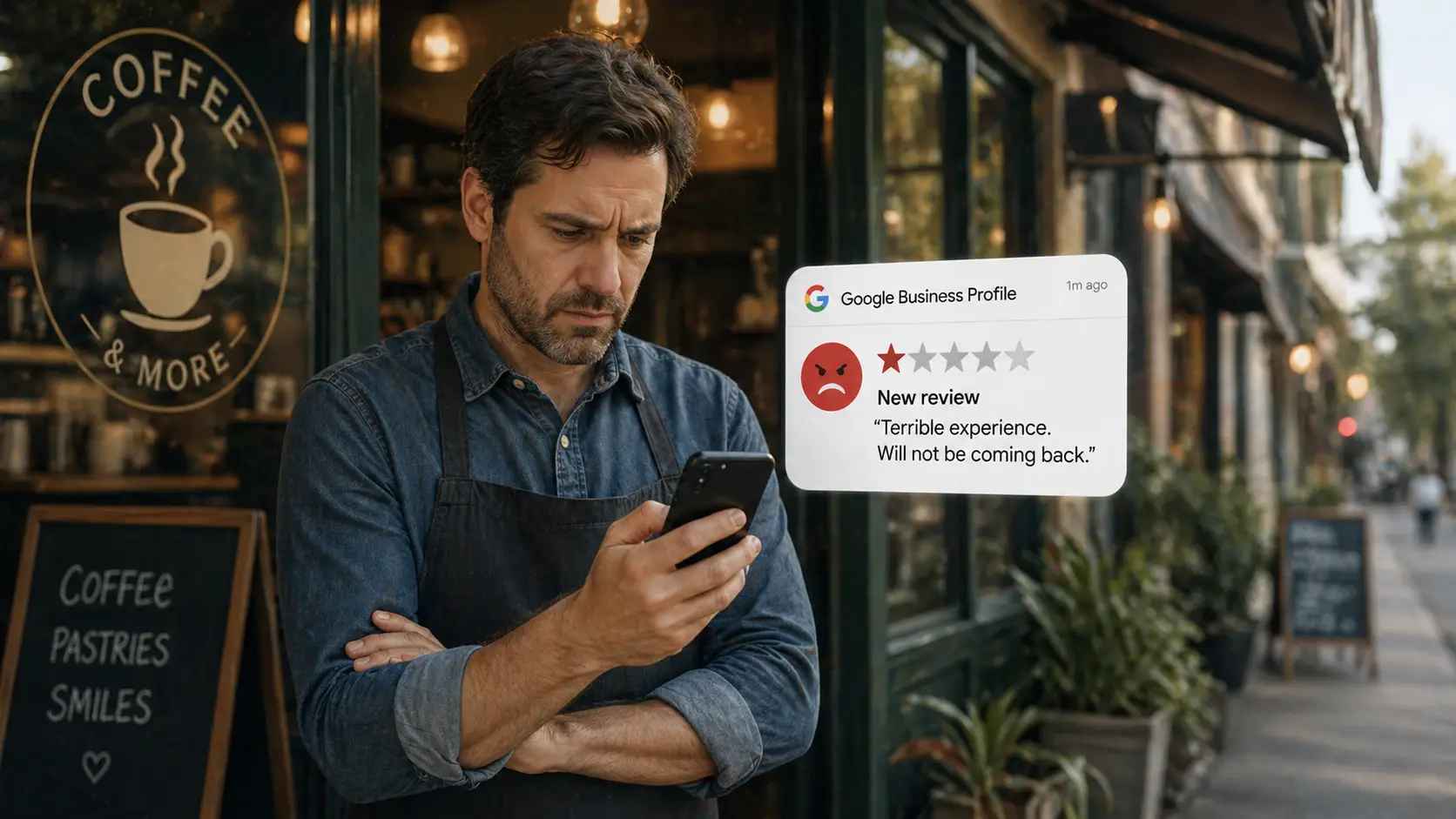
Every business is capable of getting negative reviews.
And regardless of how good your product or service is – at some point, something goes wrong, expectations aren’t met, or a customer simply has a bad experience.
The difference between businesses that grow and those that struggle is not whether they get bad reviews.
It’s how they handle them.
Where Do Google Reviews Come From?
A Google Business Profile is a crucial tool for local businesses, as studies show a large swath of buyers research these profiles before deciding where to do business.
But most business owners assume reviews only exist once they’ve created a profile.
That’s not the case.
In reality, Google is already mapping your presence whether you want it to or not. It automatically generates business listings by pulling data from your website, directories, and other public sources – often before you ever touch it.
That means customers can find your business, form opinions, and fair or not, leave reviews without you actively managing anything.
What Many Business Owners Don’t Realize about Bad Google Reviews
When business owners don’t make a conscious effort to cultivate reviews, customers are unlikely to leave feedback – especially if they’ve had a good experience. On the other hand, we all know that people who have a negative experience are much more likely to share their opinion on a product or service provider.
The result is that one or two negative reviews can severely impact your overall review score. Suddenly one negative review is defining your business, which can cost you business.
The only move is to take control – claim your profile, manage your visibility, and guide how your business is represented.
How to Handle Negative Reviews Without Damaging Your Reputation
Here’s something most business owners don’t realize: Customers don’t expect you to have perfect reviews. In fact, a mix of reviews can actually increase trust. Most potential customers understand that misunderstandings sometimes happen or that a previous customer’s expectations could have been unrealistic – some people are just impossible to please.
What they are really evaluating is:
- how you respond
- how you handle problems
- whether you take responsibility
An occasional negative review, when well-handled, can build more trust than a dozen five-star ratings.
The Worst Thing You Can Do: Ignore It
When a negative review goes unanswered, it sends a message:
- you don’t care
- you’re not paying attention
- or worse, the complaint might be valid
Potential customers are watching – even if the original reviewer never comes back. Silence creates doubt.
The Second Worst Thing: Get Defensive
It’s natural to feel frustrated when you read a negative review. But reacting emotionally is one of the fastest ways to damage your reputation. Avoid:
- arguing with the customer
- blaming them publicly
- getting sarcastic or dismissive
- sharing too much detail about the situation
Even if you’re right, you lose credibility in the eyes of future customers.
What a Good Response to a Bad Google Review Looks Like
A strong response follows a simple structure:
1. Acknowledge the Issue
Show that you’ve read and understood the concern.
2. Show Empathy
Even if you disagree, recognize the customer’s experience.
3. Take Responsibility (Where Appropriate)
This doesn’t mean admitting fault for everything – but it shows professionalism.
4. Offer a Path Forward
Invite them to resolve the issue offline.
5. Keep It Professional
Remember, you’re responding to everyone who will read it – not just the reviewer.
Example: Poor vs Strong Response
❌ Poor Response
“That’s not what happened. You misunderstood the situation. We did everything correctly.”
✅ Strong Response
“Thanks for your feedback. We’re sorry to hear about your experience. That’s not the standard we aim to deliver. We’d appreciate the opportunity to make this right – please reach out to us directly so we can help.”
Not All Negative Reviews Are Equal
Some reviews require more nuance.
Legitimate Complaints
- Acknowledge and resolve
- These are opportunities to improve
Misunderstandings
- Clarify politely
- Avoid sounding corrective
Unfair or Fake Reviews
- Stay professional
- Do not escalate publicly
- Report if necessary
In every case, your tone matters more than your position.
In some cases it’s even okay to (subtly) shift blame or call out unrealistic expectations when a review is legitimately unfair – but only if you feel that rational people would agree the feedback was probably unreasonable, and doing so doesn’t make for a response that people find too long to pay attention to.
Depending on the nature of the complaint, business owners will sometimes need to weigh the cost of correcting the problem that led to the negative review against the future loss of business.
The Bigger (Better) Strategy: Don’t Let One Bad Google Review Define Your Business
The real risk is not negative reviews – it’s having too few positive ones.
If your profile only has a couple of reviews, a single bad one can dominate your rating.
That’s why proactive review generation is critical. The goal is to create a system that:
- builds consistent volume
- maintains a strong average rating
- creates a balanced, credible profile
Final Thoughts
Negative reviews are part of doing business.
They are not a sign of failure – they are a moment of visibility.
Handled poorly, they damage trust.
Handled correctly, they demonstrate professionalism and strengthen your brand.
The goal isn’t to avoid negative feedback.
It’s to show that when things go wrong, your business responds the right way.